
Cellular Jail
🔍 Cellular Jail Highlights
📍 Distance From Airport: ~3 KM
⏰ Jail Visiting Time: 09:00 AM – 04:45 PM (Lunch Break: 12:00 PM – 01:30 PM)
📍 Open Days: No Closing Days, Visit Any Day Of The Week.
🎟️ Jail Entry Ticket: ₹30 Per Person
💡 Light & Sound Show:
🎬 Show Timings: 06:00 PM – 07:50 PM
🎭 Show Days: Operates Daily (2 Shows Per Day)
🗣️ Languages: Hindi & English
🎟️ Ticket Cost: ₹300 Per Person
⏳ Duration: 45 Minutes
👨🏫 Guide: Available
⭐ Major Attractions: Jail Sightseeing, Light & Sound Show, Museum
🏛️ Experience History Unfold At The Iconic Cellular Jail!
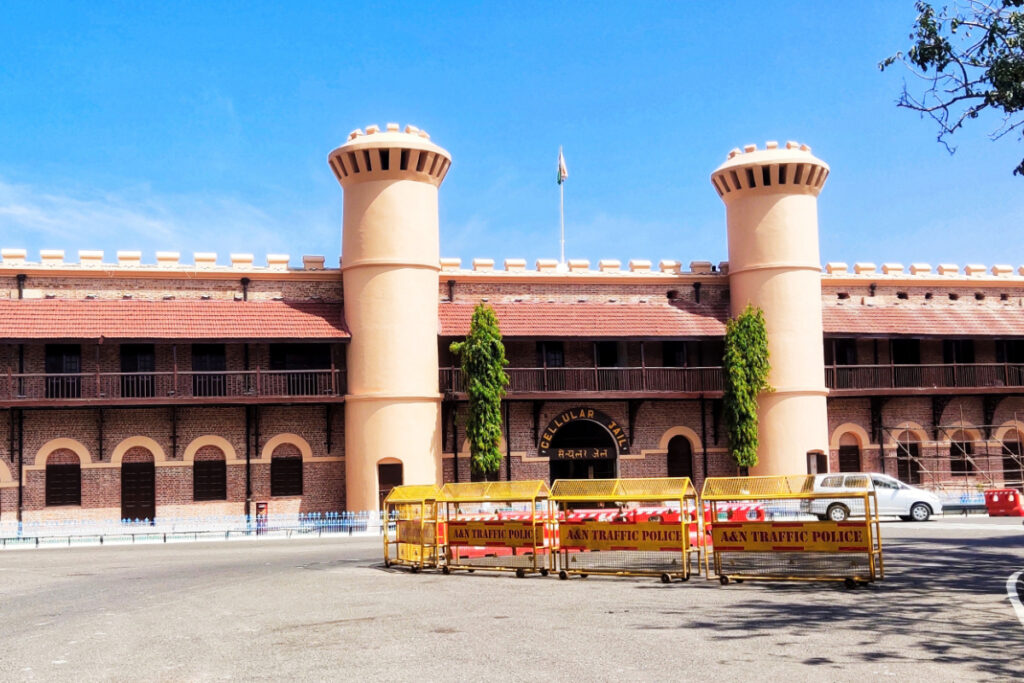
🏛 Cellular Jail – A Symbol Of India’s Freedom Struggle
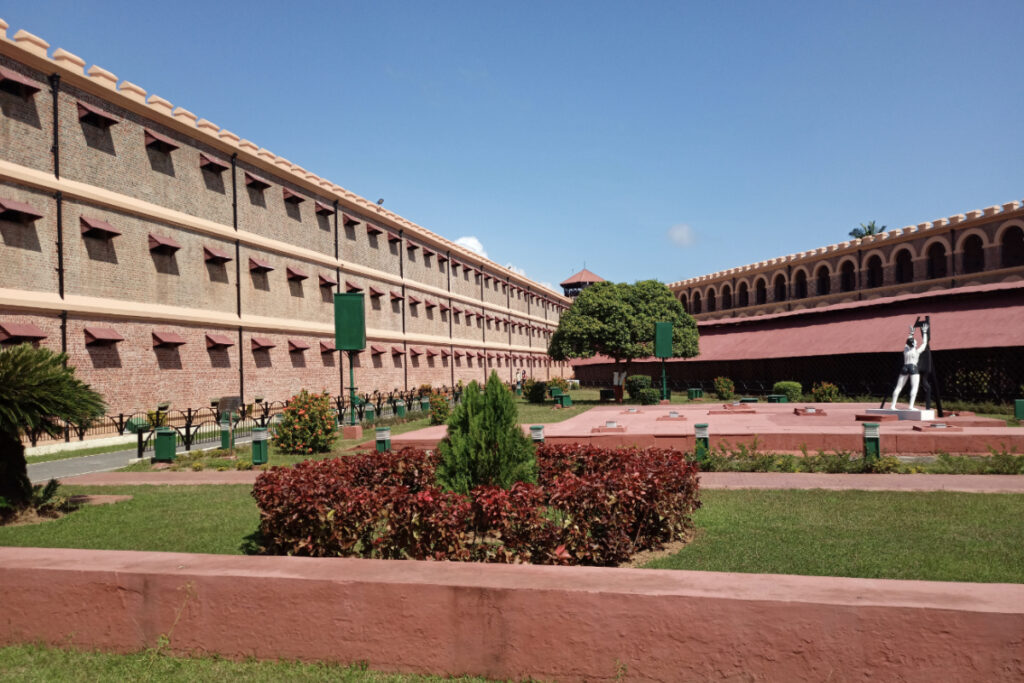
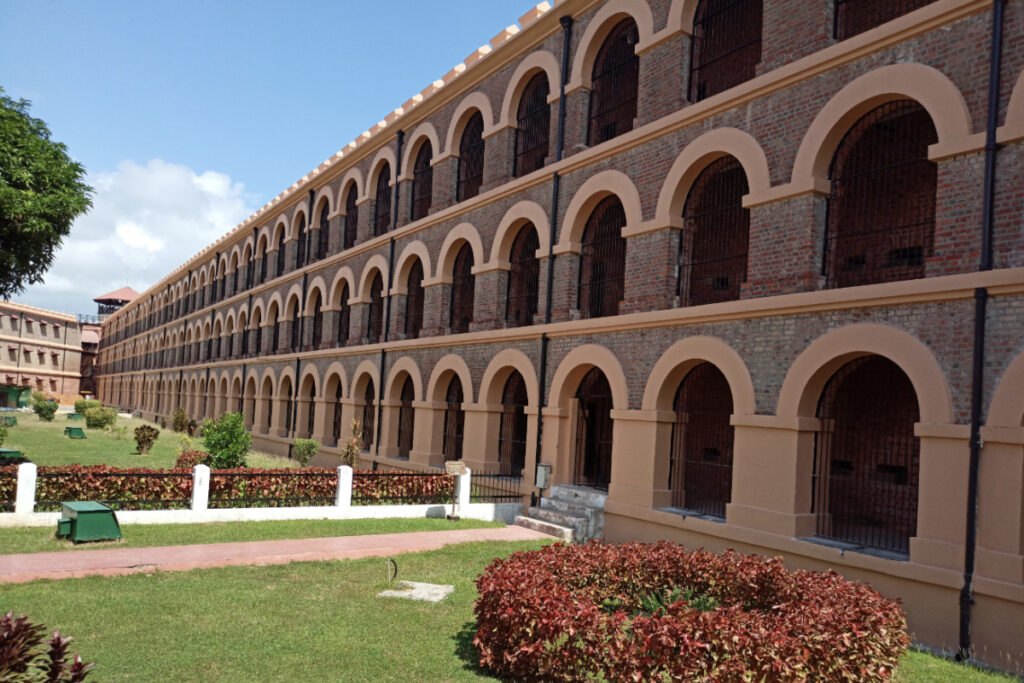
Welcome To The Cellular Jail, A National Memorial in Port Blair, Standing As A Silent Witness To The Sacrifices Of India’s Freedom Fighters. Completed In 1906, This Historical Structure Was Designed For solitary Confinement, With seven Blocks radiating From A central Tower, Resembling A Honeycomb.
📜 Why Visit?
🔹 Experience The Jail Museum, Showcasing Artifacts And Stories Of India’s Independence Struggle.
🔹 Walk Through The prison Corridors, Where Brave Freedom Fighters Were Once Incarcerated.
🔹 Attend The Light & Sound Show, Which Narrates The Struggles Faced By India’s Revolutionaries.
🕰 Museum Timings:
✅ Open: Every Day Except National Holidays
🕘 Morning: 9:00 AM – 12:00 PM
🕜 Afternoon: 1:30 PM – 4:45 PM
📍 Plan Your Visit To Honor The Valiant Freedom Fighters And Relive India’s History! 🇮🇳
🎭 Sound & Light Show At Cellular Jail
The Sound And Light Show at Cellular Jail is A must-watch Attraction that recreates India’s Freedom Struggle through Mesmerizing light Effects And Powerful Narration. This Immersive Experience brings To Life the Hardships And Sacrifices Of The freedom Fighters imprisoned Within The Jail’s Walls.
📅 Show Timings:
✅ Every Day – Two Shows
🕕 1st Show (Hindi): 6:00 PM – 6:45 PM
🕖 2nd Show:
🔹 Hindi – Tuesday, Thursday, Saturday, Sunday (7:45 PM)
🔹 English – Monday, Wednesday, Friday (7:15 PM)
🚫 Closed On: National Holidays
🎟 Ticket Price: ₹300 Per Person
⏳ Duration: 45 Minutes
✨ Don’t Miss This Moving Tribute To India’s Heroes! Witness History Unfold At The Cellular Jail Sound & Light Show. 🇮🇳
🏛 History Of Cellular Jail
📌 Penal Settlement In Andaman
The British Rulers established A Penal Settlement In The Andaman Islands in 1857, Following The Indian Rebellion (First War Of Independence). This Was designed To Exile And Punish Indian Revolutionaries who Resisted British Rule. A Survey Was Conducted By Dr. F. J. Mouat, Dr. G. R. Playfair, And Lt. J. S. Heatcote on December 8, 1857, And The Union Jack Was Raised On January 22, 1858, Officially Marking The British Possession Of The Islands.
🚢 Arrival Of The First Prisoners
The first Batch Of 200 Freedom Fighters was Brought To Ross Island on March 10, 1858, Under Dr. J. P. Walker. These Prisoners, Who Came From wealthy And Educated Backgrounds, Faced harsh Conditions, Including manual Labor And Jungle Clearing. Initially, They Were Housed In open Enclosures with A Daily subsistence Allowance Of One Anna And Nine Pies.
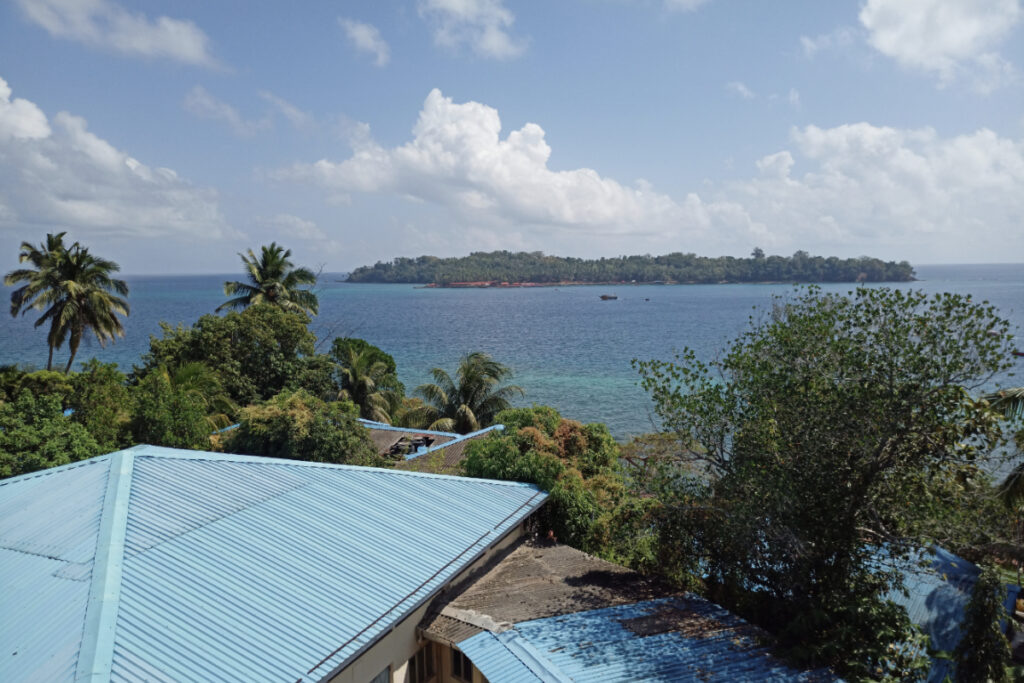
To Enforce harsher Discipline, The British Selected Viper Island as The Location For A jail And Gallows. However, As The Settlement Expanded, The Cellular Jail was Planned To isolate Prisoners And Crush Their Spirit.
🏗 Construction Of Cellular Jail
🔹 Built Between: 1896 – 1906
🔹 Architectural Design: Three-story, seven-winged structure, Radiating like The Spokes Of A Bicycle Wheel
🔹 Number Of Cells: 663 Cells For solitary Confinement
🔹 Cell Size: 13.5 Ft × 7 Ft, With an Iron Grill Door
🔹 Ventilation: Small 3 Ft × 1 Ft Window positioned 9 Ft From The Floor
The Central Tower stood At The hub Of The Seven Wings, Ensuring no Prisoner Could Communicate With Another. The Prison Was Constructed Using:
✅ 20,000 Cubic Feet of Local Stone
✅ 30,00,000 Bricks, Made At Dundas Point And Navy Bay
✅ 600 Convicts working Under Forced Labor
The Jail Was Manned By A ruthless Administration, Including Jailor David Barrie, An Irishman Infamous For His cruelty And Harsh Punishments.
🔹 Revolutionary Prisoners & Their Struggles
The Cellular Jail Housed Several freedom Fighters who Were Involved In Major Revolutionary Activities, Including:
📌 Savarkar Brothers – Vinayak Damodar Savarkar & Ganesh Damodar Savarkar
📌 Motilal Verma – Gaya Conspiracy Case
📌 Babu Ram Hari – Lahore Conspiracy Case
📌 Ullaskar Dutt – Alipore Bomb Case
📌 Barin Kumar Ghosh – Jugantar Group
📌 Prithvi Singh Azad – Kakori Conspiracy Case
📌 Pulin Das, Trailokyanath Chakravarthy, Gurumukh Singh, And Many More
These Revolutionaries Suffered inhumane Torture, Forced Labor, And Brutal Punishments, Which Turned The Cellular Jail Into A symbol Of Resistance and Sacrifice In India’s Struggle For Independence.
🇮🇳 Cellular Jail Today – A National Monument
🏛 Declared A National Memorial, The Cellular Jail Museum today Stands As A symbol Of India’s Freedom Struggle, Preserving The Stories Of sacrifice And Patriotism. Visitors Can Explore Its museum, Gallows, And The Iconic Sound & Light Show, Which Narrates The hardships Faced By The Freedom Fighters.
👉 Visit The Cellular Jail To Pay Homage To India’s Unsung Heroes!
💀 Horrors Of Prison – The Brutal Torture At Cellular Jail
The Cellular Jail Was Notorious For Its Extreme Brutality. Prisoners, Especially political Revolutionaries, Faced Inhumane Treatment, Forced Labor, And Cruel Punishments.
🔹 Forms Of Punishment
🔻 Torture & Flogging – Those Who Failed To Meet Daily Work Quotas Were flogged Mercilessly.
🔻 Iron Triangular Frame – Prisoners Were Tied In Excruciating Postures For Long Hours.
🔻 Gunny Bag Uniforms – Worn Without Undergarments, Causing severe Skin Abrasions.
🔻 Unhygienic Diet – Prisoners Were Given A bare Minimum, Often Rotting Food.
🔻 Shackles & Chains – Bar Fetters, Crossbar Fetters, Neck Rings, And Leg Irons Were Common.
🔻 Solitary Confinement – Prisoners Spent Days In Complete darkness And Silence.
Many Prisoners Succumbed To exhaustion, Disease, And Maltreatment. The warden David Barrie, Infamous For His ruthlessness, Subjected Inmates To relentless Cruelty.
⚔ The Revolt Of Freedom Fighters
Faced With barbaric Oppression, The Inmates Of Cellular Jail revolted:
✅ Mass Hunger Strikes – The longest Strike Lasted 45 Days (1937-38).
✅ Intervention Of Leaders – Mahatma Gandhi And Rabindranath Tagore advocated For The Prisoners.
✅ Closure Of The Penal Settlement – By January 1938, Political Prisoners Were repatriated to Mainland Jails.
⚔ Japanese Occupation (1942-1945)
During World War II, The Japanese Occupied The Andaman & Nicobar Islands. This Period Saw:
🔻 Mass Executions – Educated Locals Were Arrested As suspected British Spies and shot Dead.
🔻 Cellular Jail Used For Torture – Many Were imprisoned And Brutally Executed.
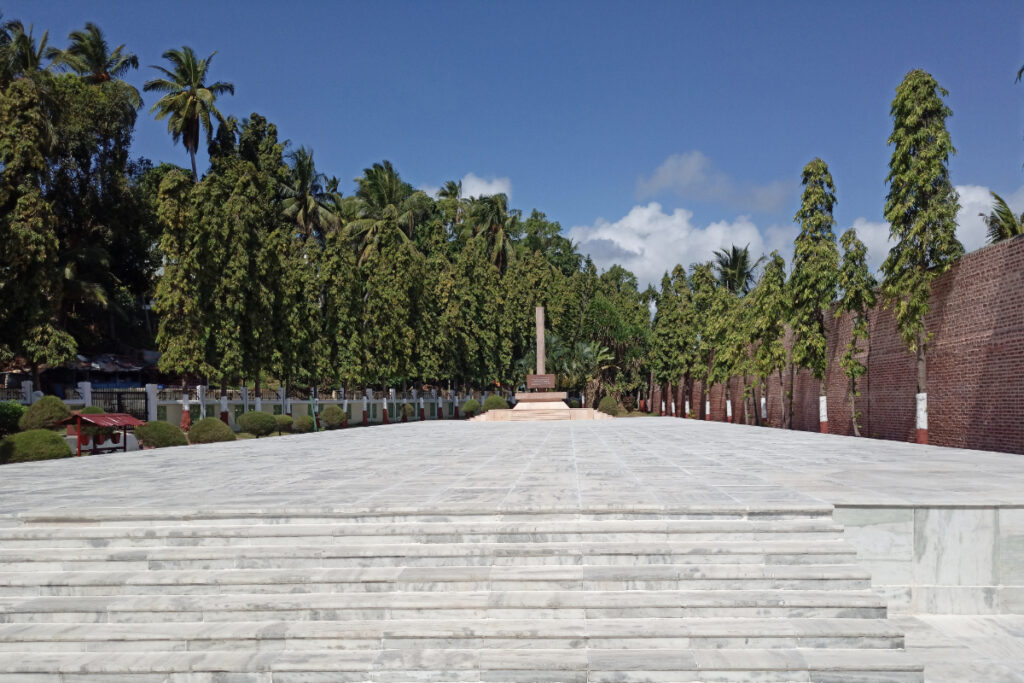
🔻 The Humfraygunj Massacre – 44 Innocent Civilians were Executed And buried In A Mass Grave.
🔹 Netaji Subhash Chandra Bose’s Role
✅ Visited Andaman In December 1943 as The Head Of The Provisional Government Of India.
✅ Stopped Arbitrary Executions without Proper Trials.
✅ Hoisted The Indian Tricolor Flag in Andaman For The first Time.
✅ Renamed The Islands:
- Andaman ➝ Swaraj Dweep (Self-Rule Island)
- Nicobar ➝ Shaheed Dweep (Martyr’s Island)
🏛 Today, The Cellular Jail And Humfraygunj Martyrs Memorial stand As somber Reminders Of The Sacrifice And Courage of Those Who Suffered For India’s Freedom.
🚗 How To Reach Cellular Jail From Your Hotel
📍 Location: City Center Of Port Blair, Andaman & Nicobar Islands
🛺 Transport Options:
✔ Taxi / Auto-Rickshaw – Available From Hotels, Airport & Harbor
✔ Public Bus – Budget-friendly Option
✔ Two-Wheeler Rental – Explore At Your Own Pace
📏 Distance:
✈️ From Airport: ~3 KM
⚓ From Harbor: ~6 KM
💡 Tip: Check With Your Hotel’s Concierge For The Best Route And Transport Options Based On Your Location.
Frequently Asked Questions
The Cellular Jail is also called Kalapani Jail because the term ‘Kalapani’ literally means ‘black waters’ in Hindi, referring to the dark waters that surrounded the Andaman Islands where the jail is located. The jail earned this nickname because prisoners were sent there as part of their punishment and were cut off from their families and the mainland, making it nearly impossible for them to return. Additionally, the brutal conditions and treatment inside the jail were so severe that many prisoners died there, and it became known as a place of no return or a place where people went to die.
The best time to visit Cellular Jail is between October and April when the weather is pleasant and dry, and the sea is calm, making it easier to take a ferry to the islands. The jail is open from 9 am to 4:45 pm, and it usually takes 1-2 hours to explore the premises.